Presentations
Comfort comes first: Supporting tube-fed children in feeding therapy
Feeding support for tube-fed children is about more than intake or skills – it begins with comfort. In this talk for Feeding Tube Awareness Week, Carly Veness, Principal Speech Pathologist at Babble & Munch, explores why comfort must come first for tube-fed children before curiosity (exploration) and capability (skills) can emerge. Using the Circles to Feeding™ Approach, she shares a compassionate, child-led way to understand feeding therapy that supports felt-safety, trust, and meaningful progress. This session is relevant for families and professionals supporting tube-fed children at any stage of their feeding journey.
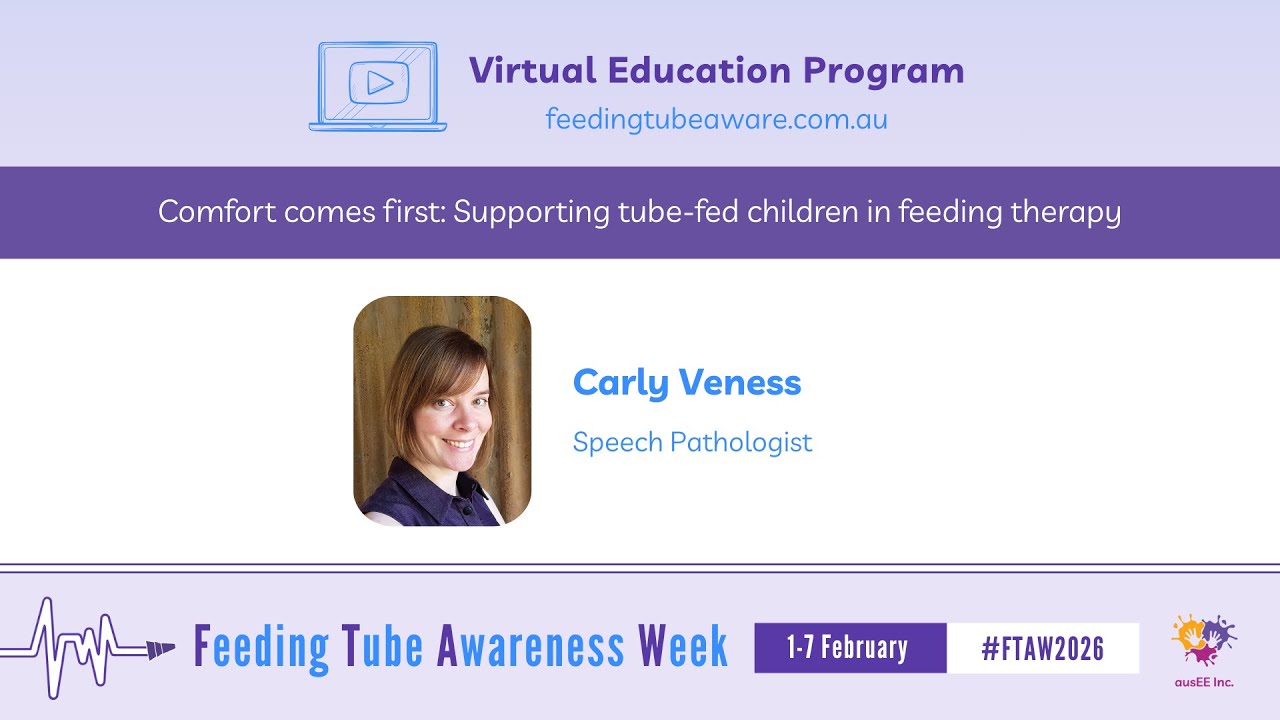

Carly Veness,
Speech Pathologist
Carly Veness, CPSP, IBCLC, MSPA, is a Speech Pathologist and International Board Certified Lactation Consultant based in Melbourne, Australia. She is the Founder & Principal Speech Pathologist at Babble & Munch Feeding Therapy, a private practice supporting infants, children, and families with feeding and swallowing difficulties around Australia. Carly also holds an appointment at the Royal Women’s Hospital in the Neonatal Intensive Care Unit, working with medically complex infants. She is the Founder of Babble & Munch Learning, an international training platform for health professionals in feeding, and the creator of the Circles to Feeding™ Approach. With over 20 years of experience, Carly has a particular focus on infant feeding, gastrointestinal and allergy conditions, infant mental health, tube feeding, oral function, and responsive feeding therapy. Carly also holds a Graduate Diploma in Infant and Parent Mental Health and is committed to advancing the field through education and professional development.
@babbleandmunch
@circlestofeeding
Blended by Sarah in conversation with Lewis Railton & Pedro Relvas
Through laughs, reflection and real conversation, Pedro and Lewis unpack what life with a feeding tube looks like at school, in the gym and beyond. This video challenges underestimation and reframes tube feeding as a superpower that enables freedom, capability, and confidence.
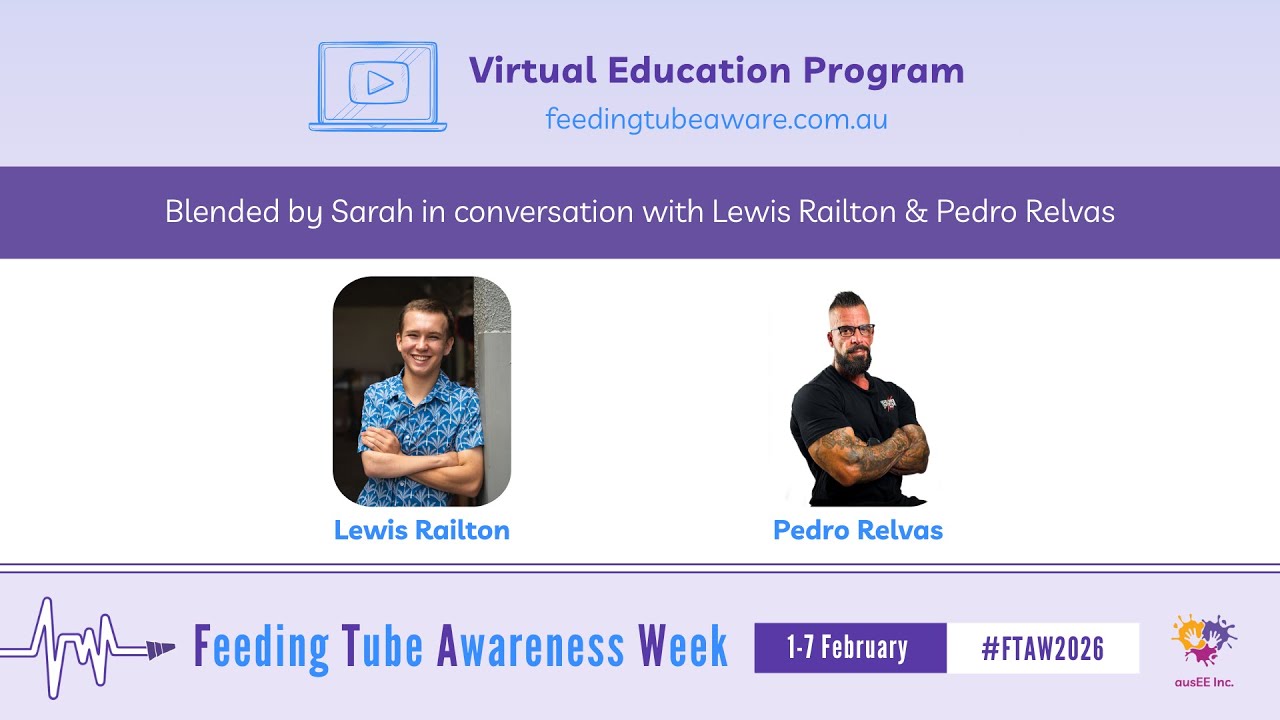

Lewis Railton
Lewis Railton, a 17-year-old youth advocate and speaker. Lewis survived a stroke at age three, he faced challenges with chewing and swallowing safely. Now Lewis is living with a gastrostomy (G) tube, he is a passionate advocate inspiring others in the tube-feeding community.
@blendedbysarah.au

Pedro Relvas
Pedro Relvas is a brain tumour survivor and disability rights advocate who lives with long-term PEG feeding due to neurological complications. Through The iAlpha Project, he helps people develop resilience, emotional intelligence, and self-leadership — grounded in lived experience and disciplined action.
@wolfpepe
What research reveals about living with a temporary feeding tube: What families told us
This video presents Claire's PhD research, which explores the hidden burdens and daily realities of families caring for children with temporary feeding tubes. It highlights the significant time, financial, and emotional costs involved throughout the entire journey, from the point of tube insertion to tube removal.
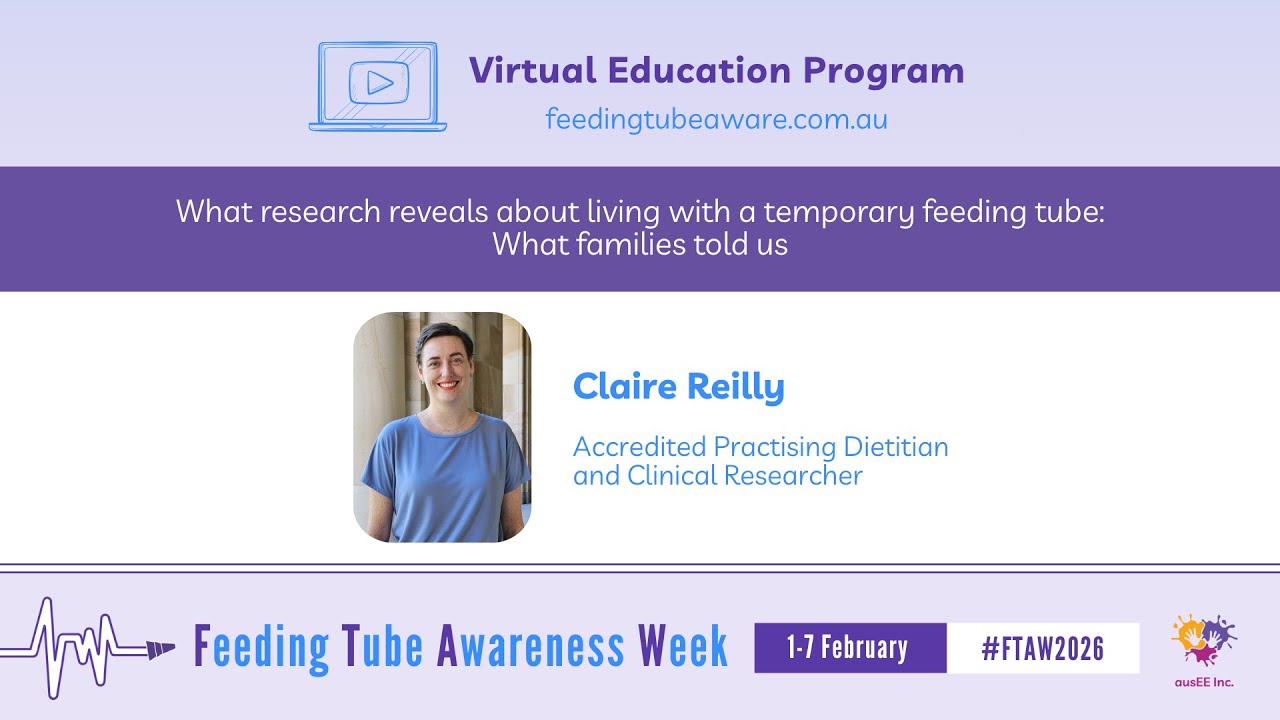

Claire Reilly, Accredited Practising Dietitian
and Clinical Researcher
Claire is an accredited practising dietitian (APD) and clinical researcher passionate about improving family centred care for children who need feeding tubes. Her PhD research focuses on the management of children with temporary feeding tubes, with the goal of improving care and outcomes for children and their families. She has presented her work at international conferences, published in leading research journals and received multiple awards, including The University of Queensland’s 2024 Three Minute Thesis competition.
From tube to toothbrush: Supporting oral health for people with complex care needs
People who rely on tube feeding or have complex care needs are at increased risk of oral health problems due to limited oral stimulation, modified diets, sensory sensitivities, and challenges with daily oral hygiene routines. These risks can affect children, adolescents, adults, and older people.
In this session, Dr Carol Tran explores how reduced oral experiences and care challenges impact oral health across the lifespan. She shares practical, trauma-informed strategies to support toothbrushing, oral desensitisation, and positive oral care routines that are realistic and achievable for families, carers, and support workers. The session is suitable for parents, carers, and health professionals supporting people of all ages with complex needs.
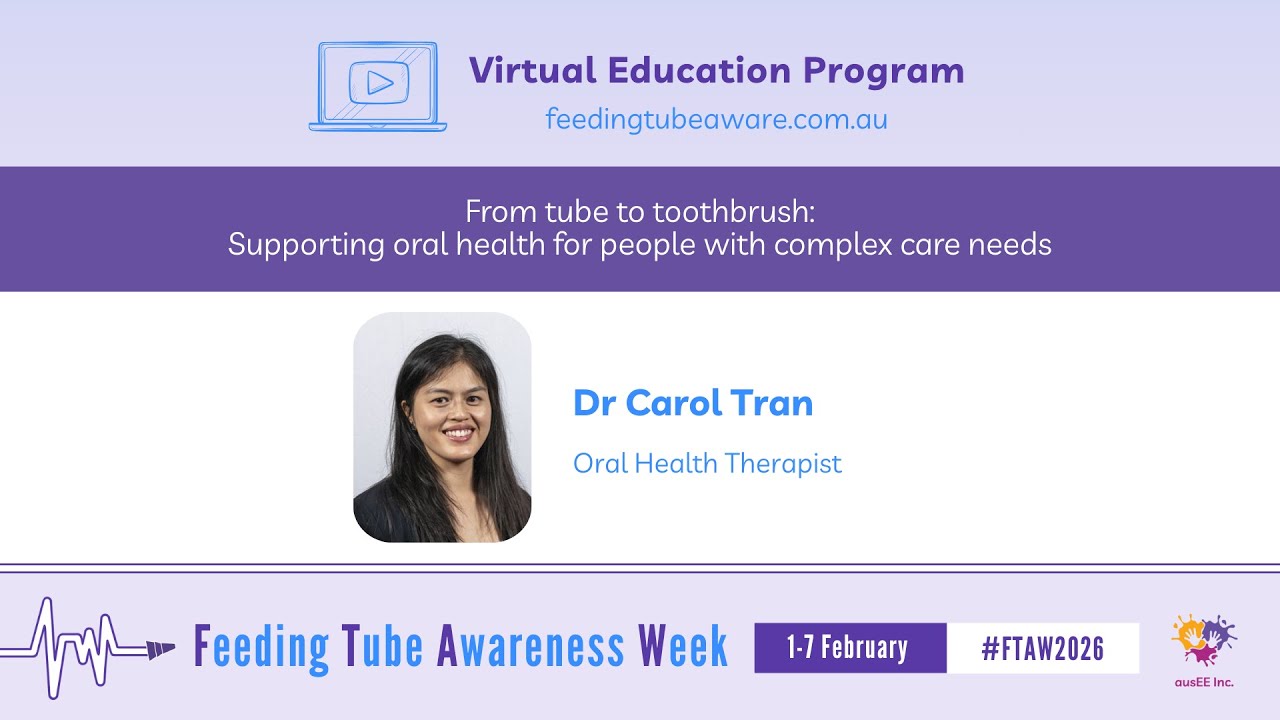

Dr Carol Tran,
Oral Health Therapist
Dr Carol Tran (PhD, BOH) is an Oral Health Therapist, researcher, and health educator with over 20 years’ experience supporting people with complex health and care needs across the lifespan. She holds a PhD in dental research from The University of Queensland and has held senior academic, advisory, and accreditation roles with universities, government, and professional bodies, including Queensland Health and the Australian Dental Council.
Dr Tran is the co-founder of Oral Health Home, a community-based oral health service that delivers prevention-focused, trauma-informed oral health education and support in partnership with families, disability services, schools, aged-care providers, and community organisations. Oral Health Home works closely with allied health professionals — including speech pathologists, occupational therapists, dietitians, nurses, and support workers — to ensure oral health care is integrated into broader care plans and everyday routines.
Her work focuses on building confidence and capability in families and care teams, supporting people who experience sensory sensitivities, medical complexity, and challenges with oral hygiene. Dr Tran is passionate about practical prevention, early support, and improving quality of life through accessible, collaborative oral health care.
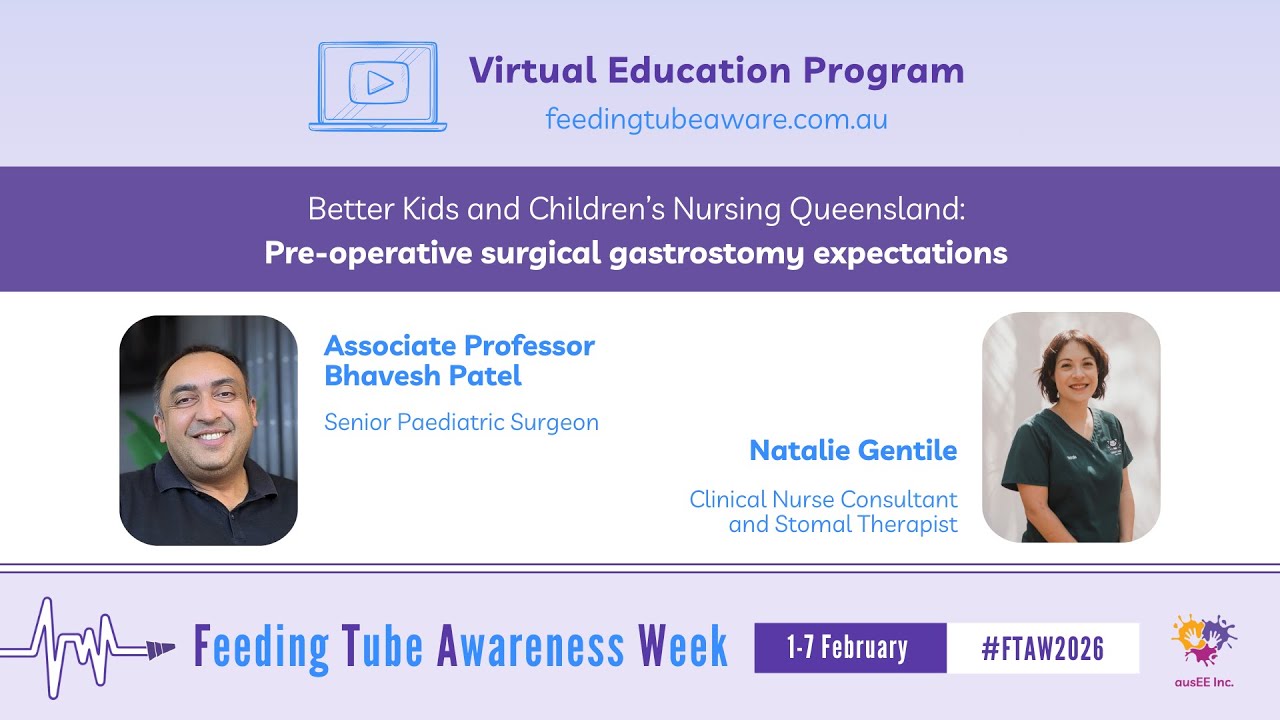
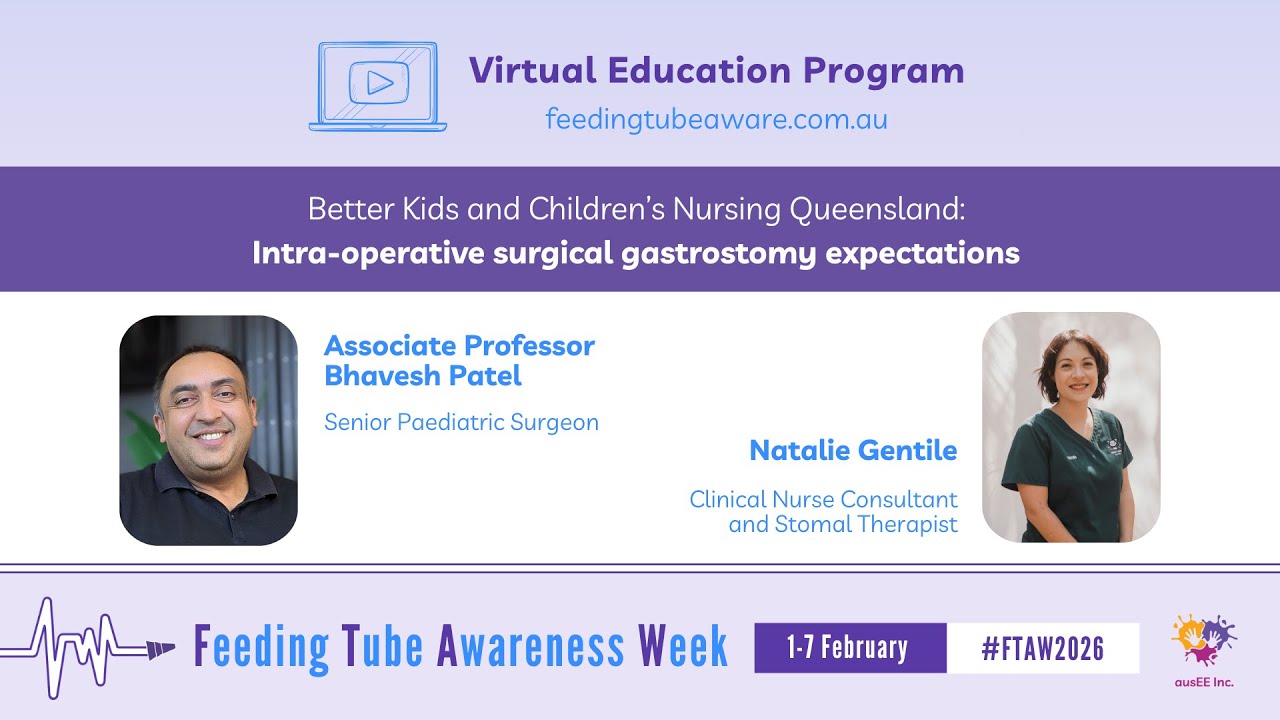
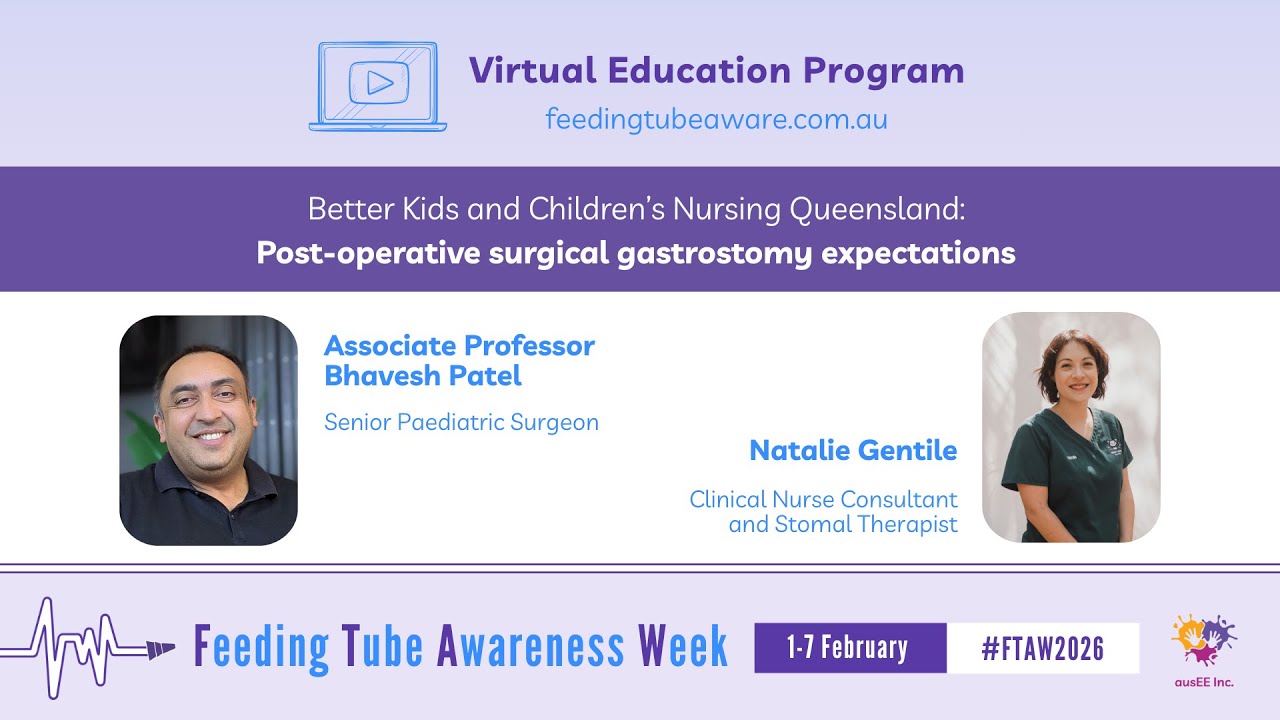

Associate Professor Bhavesh Patel,
Senior Paediatric Surgeon
Bhavesh has provided surgical care for over 20 years and has considerable experience in paediatric and neonatal surgery, colorectal and urological surgery. He is a Senior Paediatric Surgeon at the Queensland Children’s Hospital and on international advisory groups for surgical quality improvement. He is the Queensland State-wide Clinical Lead for Surgical Quality improvement through his appointment at Clinical Excellence Queensland. As an Associate Professor he teaches students at several medical schools and provides state-wide education to nursing staff and other medical professionals. He trains future surgeons, and his research spans across a number of fields. Bhavesh also has interests in digital health, technology, health literacy and human factors in health care.

Natalie Gentile, Clinical Nurse Consultant
and Stomal Therapist
After initially completing a Bachelor of Social Science with a major in sociology, Natalie’s passion for social justice closely aligns with her desire to help all patients and families to receive appropriate and compassionate health care. Since commencing her nursing career in 2015, Natalie has worked extensively in paediatrics, is a registered Stomal Therapist, and has extensive experience with surgical, stomal, urological and burns patients. She is the co-founder of Children’s Nursing Queensland and Australian Specialist Nurses, which aim to improve accessibility to specialist nursing services across Australia for individuals with complex medical and disability related health care needs.
Introducing the SUCCEED Gold Standard Nasogastric Tube Feed video resources
SUCCEED Child Feeding Alliance is an Australian not-for-profit helping to change the world for children and families with complex feeding difficulties, especially those who tube feed. Over the past 9 years we’ve heard so many stories about how difficult it is to find safe, reliable, useful information on how to give a tube feed at home, especially when children first leave hospital. This video was made to demonstrate a “SUCCEED gold standard” nasogastric tube feed, based on peer-reviewed research we published in 2025. The video, the research and all our resources are freely available online at childfeeding.org/tube

Dr Chris Elliot,
General and Developmental Paediatrician
Dr Chris Elliot is a General and Developmental Paediatrician and a co-founder of SUCCEED Child Feeding Alliance. SUCCEED is a national not-for-profit aiming to create a world where children with feeding difficulties, and their families, thrive.
Parents' experiences of their child's transition from tube to oral feeding during an intensive intervention program
Dr Emily Lively shares her research on parents' experiences of weaning their children and the implications this feedback has on improving care teams that support tube fed children.

Dr Emily Lively, Speech Pathologist, Lively Eaters Feeding Therapy and Co-Founder, WHOLE Enteral
Emily has worked within paediatric Speech Pathology since 2000. Over the last 22 years she has specialised in infant and paediatric feeding difficulties, working at both hospital and community clinic settings in country South Australia, the United Kingdom and metropolitan Adelaide. Emily is the Founding Director of Lively Eaters - a truly interdisciplinary centre that specialises in supporting children with eating, drinking and/or mealtime difficulties and their families. Emily’s clinical area of expertise lies in supporting non-oral children (tube-fed) to learn to eat and drink within their capabilities. Emily completed her PhD through Flinders University in 2023 titled ‘ Optimising Paediatric Tube Weaning Practices’. Emily has published peer-reviewed papers on international approaches to tube weaning, predictive clinical factors for successful tube weaning and the lived experience of parents as they support their tube-fed child to learn to eat and drink. Emily’s research has led her to develop evidence-based principles for successful tube weaning that are currently being peer-reviewed. In her role as a clinician-researcher, Emily has peer-reviewed many feeding-related research articles. She provides regular training workshops to parents and health professionals, has lectured in Paediatric Feeding at Flinders University and the University of Queensland and has presented at a range of national and international conferences and workshops.
In addition, Emily extensively supports neuro-divergent children, those with developmental delays and complex feeding relationships within the context of holistic, family-centred feeding therapy. Emily and her team of Occupational Therapists, Speech Pathologists, Dietitians, Infant Mental Health therapists and paediatrician develop functional and enjoyable mealtimes and feeding partnerships for children and their families Australia-wide and internationally via the unique Lively Eaters intensive, residential, family-centred feeding therapy program.
Emily strongly believes feeding alone cannot be assessed or addressed without looking at the complex interaction between environment, behaviour, medical, sensory, motor, emotional and developmental skills of a child and their greater family. It is from this family-focused foundation that she continues to be moved by the dedication of the families she works with and the life-changing mealtime improvements that families strive so hard to achieve.
Emily’s clinical expertise and passion led her to co-found WHOLE Enteral – Australia’s first wholefood formulated meal-replacement tube feeding formula. Enrich, was launched into the market in 2022 and over 2025 has undergone packaging improvements and re-formulation to remain at the forefront of allergy standards and regulations. Emily is excited that the new and improved product will be available from early 2026 as it is so rewarding and fulfilling to improve daily mealtimes for tube-fed adults and children.
@livelyeatersfeedingtherapy
@whole_en
Advocate like a boss: Trust your gut, speak up, and get the support you need to thrive on tube-feeds
Join Melanie Dimmitt, founder and editor of The Blend tube-feeding magazine, in conversation with two of the new issue's interviewees: tube-feeding student and youth advocate Olivia Stead, and caregiver advocate Eliana Joseph. Together, they'll share strategies to tune into your gut and stick up for yourself – and your family – when navigating the medical systems and challenges surrounding tube-feeding.

Melanie Dimmitt,
Founder and editor of The Blend magazine
Melanie Dimmitt is an award-winning author, podcaster and caregiver advocate. She’s the founder and publisher of the world’s only tube-feeding lifestyle magazine, The Blend, which launched in 2021. In 2019, her internationally acclaimed book, Special: Antidotes to the Obsessions that Come with a Child's Disability, was published by Ventura Press. She also creates and hosts the NDIS Know-how and Tubie Talks podcasts and, through media and speaking appearances, advocates far and wide for the caregiver community.
Prior to all of this, while working as a journalist across titles like The Age, Sydney Morning Herald, Broadsheet and Collective Hub magazine, Melanie’s first child was born with profound disability.
Unsatisfied with the lack of uplifting resources for her family, Melanie made it her mission to share stories and advice from the caregiver and disability communities – and celebrate these experiences in the beautiful, premium formats they deserve.
She’s since been featured as a guest on The Project, ABC’s Radio National, HIT Network’s Carrie & Tommy Show and Today Extra. She’s been interviewed by Richard Wilkins for Flying Fox’s 2020 Fun-A-Thon and on dozens of podcasts, including Mamamia’s No Filter and the UK’s Dirty Mother Pukka and BBC series Welcome to Holland.
Melanie’s speaking and hosting engagements have included Plumtree’s Now and Next family conference, Sotos Syndrome Australasia conference and Future Women’s Carers and Caring event.
@the_blend_mag
Evaluating health-related quality of life (HRQoL) in patients who use home enteral nutrition in Australia/New Zealand
In this video, ausEE’s president, Mercedez Hinchcliff, dives into the results of her research into tube feeding in both adults and children across Australia and New Zealand. She explores the hidden costs, like social stigmas, challenges at work, physical pain, and the longing for favourite foods, that shape the Health-Related Quality of Life for the tube-fed community.

Dr Mercedez Hinchcliff,
Deputy Dean (Education), University of Wollongong and President, ausEE Inc.
Mercedez Hinchcliff is Deputy Dean (Education) at the University of Wollongong and President of ausEE Inc. She is a nationally recognised leader in advancing awareness, education, and advocacy for people living with Eosinophilic Gastrointestinal Diseases (EGIDs). Through her role with ausEE, Mercedez drives initiatives that amplify patient voices, foster community support, and influence systemic change in health and education. Her recent research focuses on evaluating quality of life outcomes for tube-fed individuals, ensuring their lived experiences shape policy, clinical practice, and community-based support. By bridging academic research with real-world impact, Mercedez champions evidence-informed approaches that improve equity, inclusion, and wellbeing for vulnerable populations.
From tube to table and hospital to home
Follow the journey from little bites to big leaps, highlighting key principles and real-world outcomes, emphasising the profound impact early, individualised, evidence-based support has for children and families.
Part 1: Paediatric feeding foundations - Introduces the critical role of feeding in child development, the prevalence and complexity of feeding disorders, and the biological, behavioural, skill, and social factors involved. Let's dispel common myths, outline foundational science, and underscore the need for multidisciplinary assessment and specialised care—setting the stage for why early intervention is essential.
Part 2: Real-world rippling results and lived experiences - Shares real-life case outcomes and caregiver stories, showing how intensive, tailored interventions can rapidly improve children’s health, independence, and well-being, while transforming family life, demonstrating the process and value of translating hospital-level expertise into practical, sustainable support in the home.
Disclaimer: Findings and outcomes presented are based on multimethod, multitrait data and evidence that is published, peer-reviewed, experimentally-controlled, operationally-defined, and with established reliability and validity.
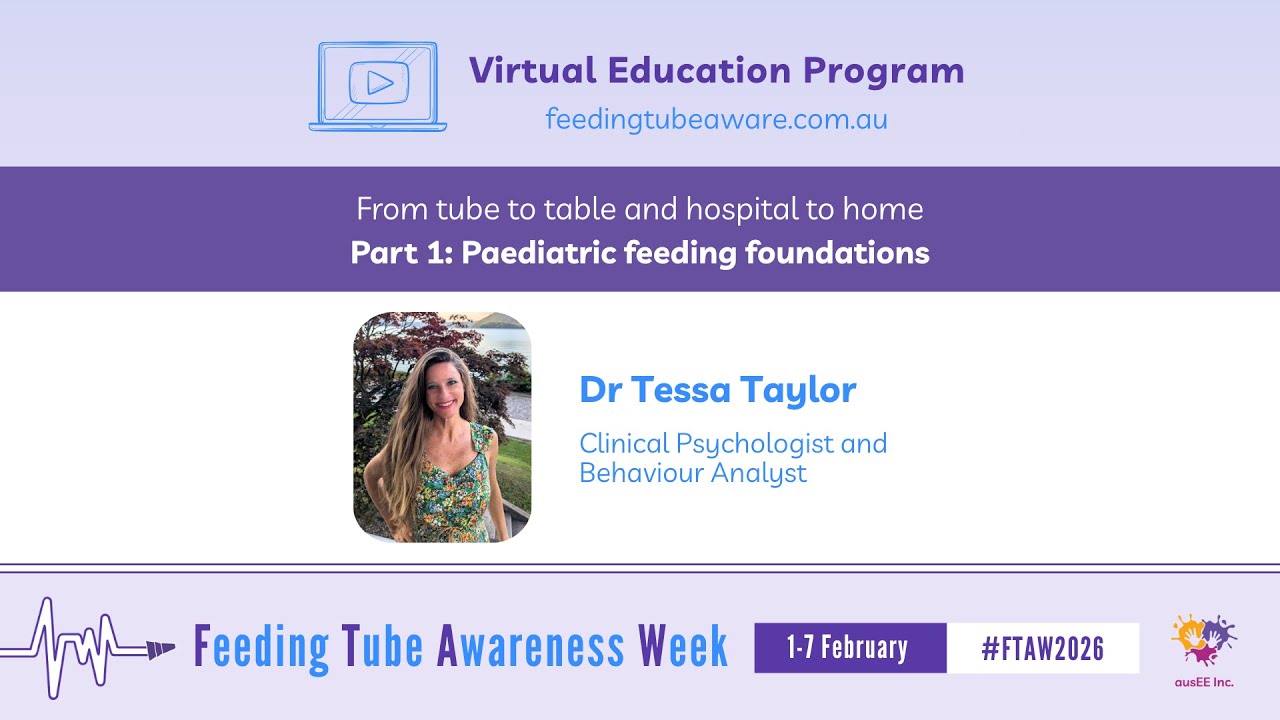
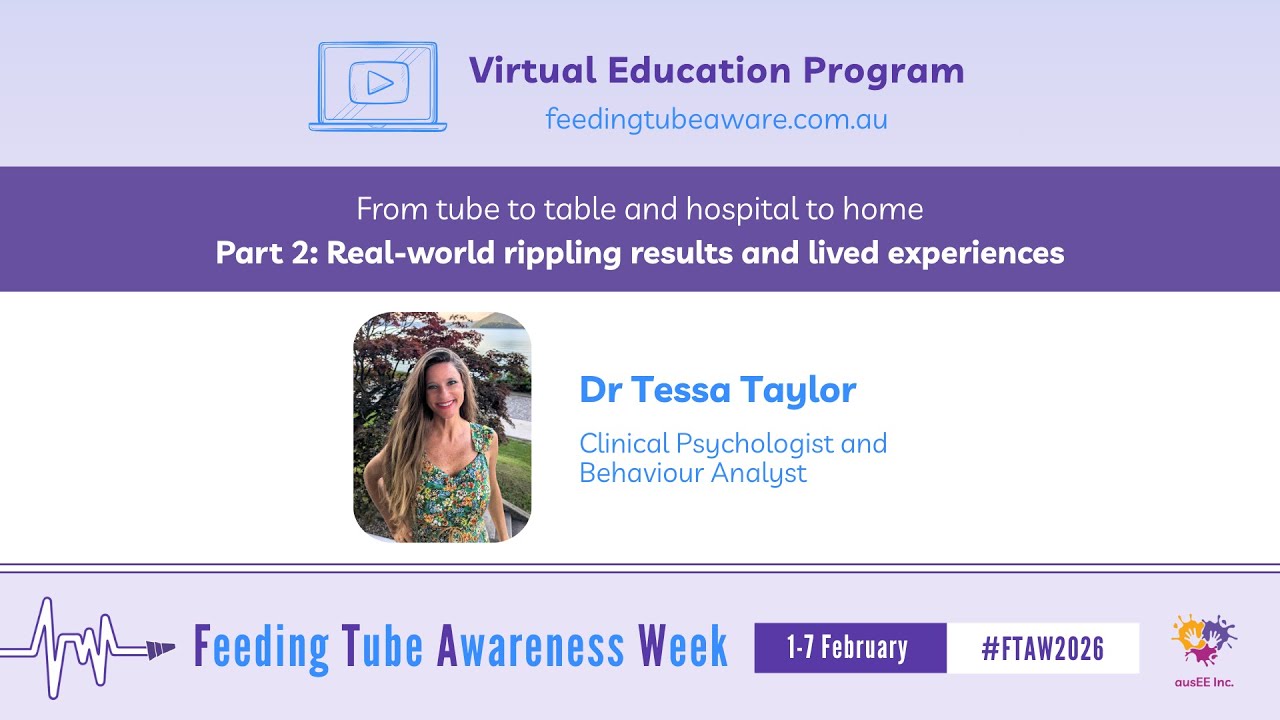

Dr Tessa Taylor,
Clinical Psychologist and Behaviour Analyst
Dr. Tessa Taylor (PhD, BCBA-D, FCCLP) obtained her Master’s degree in 2001 and PhD in clinical psychology in 2010 in Louisiana. After completing her predoctoral internship and postdoctoral fellowship at Johns Hopkins University School of Medicine/Kennedy Krieger Institute, Dr. Taylor (ClinPsyc) remained on as a faculty in the Pediatric Feeding Disorders Program. This programme is the original and largest, and one of the few interdisciplinary behaviour-analytic programmes of its kind, supporting the most severe and complex children from all over the world. She also interned with Dr. Louis Hagopian on the Neurobehavioral Inpatient Unit (NBU-IP) for severe problem behaviour (e.g., pica, self-injury). Dr. Taylor has authored over 60 peer-reviewed research publications and 3 book chapters. She has given over 70 professional presentations internationally in 13 countries, translated into multiple languages. Areas of expertise include: paediatric feeding/ARFID, tube dependency (‘weaning’), pica, medication acceptance, social validity and using choice to inform treatment progression and arrangements of response effort and reinforcement, teaching mealtime independence skills, translating hospital programmes into the home and community, multi/interdisciplinary teams and competency, and merging group and single-case experimental designs and statistical analysis. She is an Adjunct Senior Fellow at the University of Canterbury | Te Whare Wānanga o Waitaha, Christchurch, New Zealand in the Department of Psychology, Speech & Hearing | Te Kura Mahi ā-Hirikapo and School of Health Sciences | Te Kura Mātai Hauora. She founded Paediatric Feeding International in 2015. Dr. Taylor has over 25 years of experience spanning a variety of ages (from toddlers to older adults), settings (homes, schools, group homes, developmental centres, hospitals, outpatient clinics), conditions (e.g., complex neurological, medical, and genetic conditions), and interdisciplinary team coordination areas (psychiatry, paediatrics, gastroenterology, allergy, dietetics, social work, speech therapy, occupational therapy, child life, education).